 Business License

The Complete Guide to STONEL QN Series Position Monitors: Compact, Versatile, and Built for Hazardou
The Complete Guide to STONEL QN Series Position Monitors: Compact, Versatile, and Built for Hazardous Environments
In process automation, the ability to verify valve position with confidence isn’t just a convenience—it’s a safety imperative. Whether you are managing a chemical processing unit, a pharmaceutical batch reactor, a food and beverage production line, or an oil and gas transfer station, knowing when a valve is truly open, truly closed, or stuck somewhere in between defines the reliability of your entire control loop.
Enter the STONEL QN series — the nonincendive and intrinsically safe member of the renowned STONEL Quartz™ family of valve position monitors. Designed for Div. 2/Zone 2 hazardous environments with the flexibility to also serve general-purpose safe area applications, the QN series delivers the perfect balance of industrial durability, communication versatility, and cost-effective performance.
This comprehensive guide will walk you through everything you need to know about the STONEL QN series — from its position within the Quartz product family to model specifications, key features, applications, installation benefits, and long-term value for plant operations.
Chapter 1: Understanding the STONEL Quartz™ Family – Where the QN Series Fits
The STONEL Quartz limit switch platform is one of the most trusted names in industrial valve position monitoring. Manufactured under the Valmet (formerly Metso) umbrella, the Quartz series is recognized globally for its durability, corrosion resistance, and application versatility.
The Quartz family is available in five distinct versions, each optimized for specific environmental and regulatory requirements:
| Series | Hazardous Area Rating | Enclosure Material | Primary Application |
|---|---|---|---|
| QX | Explosionproof – Div. 1/Zone 1 | Epoxy-coated aluminum / Stainless steel | Highest-risk hazardous areas |
| QN | Nonincendive / Intrinsically safe – Div. 2/Zone 2 (Div. 1/Zone 0 with Namur) | Epoxy-coated aluminum / Clear polycarbonate cover | Moderate-risk and safe areas with compact footprint |
| QG | General purpose (NEMA 4,4X,6) | Lexan™ clear cover | Safe area applications |
| QC | Explosionproof – Low temperature (-55°C / -67°F) | Epoxy-coated aluminum / Stainless steel | Extreme cold environments |
Among these, the QN series occupies a unique sweet spot: it is certified as nonincendive for Div. 2/Zone 2 hazardous environments when using proximity sensors with a clear cover, and can be configured with intrinsically safe Namur sensors or passive switches for Div. 1/Zone 0 applications.
But its value proposition extends beyond hazardous area compliance. The QN series is also one of the most compact position monitors available, making it an ideal choice when clearance above the actuator is limited — a common challenge in densely packed piping systems.
Chapter 2: Key Features That Set the QN Series Apart
What makes the STONEL QN series a preferred choice among engineers and system integrators? The answer lies in a thoughtful combination of features that address real-world installation, maintenance, and operational challenges.
2.1 Rapid Enclosure Access
The QN series features a screw-on cover that provides a vapor-tight seal while allowing entry to internal components in less than five seconds. For maintenance teams, this means less time battling stuck fasteners and more time completing actual service tasks.
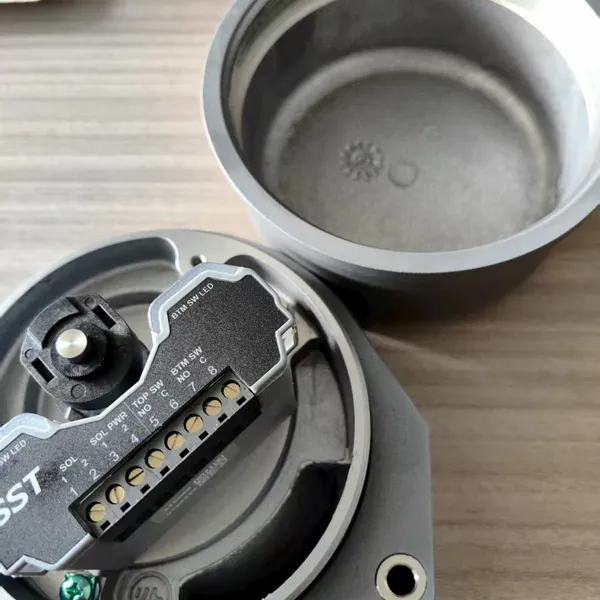
2.2 Faster Wiring – Pre-Wired and Labeled Terminal Strip
Field wiring is often one of the most time-consuming aspects of installing a position switch. The QN series solves this with a pre-wired, clearly labeled terminal strip that enables quick and convenient attachment of field wires. No more guesswork — just connect and go.
2.3 Quick Set Cams – Touch and Tune
Setting the actuation points for a position switch has traditionally required specialized tools and patient fine-tuning. The QN series eliminates this frustration with “touch and tune” cam adjustments that allow you to modify switch settings in seconds without tools.
2.4 Dual Shaft O-Ring Seals – Corrosion Elimination
The QN series incorporates top inner and bottom outer shaft o-rings that seal the drive bushing from external corrosives and internal contaminants. This double-seal design dramatically extends service life in corrosive and washdown environments.
2.5 Oil-Impregnated Bronze Bushing – Long Cycle Life
One of the most common failure modes for position switches is shaft seizure caused by actuator shaft eccentricity. The QN series addresses this with a special oil-impregnated bronze bushing that maintains smooth operation and eliminates seizure potential.
2.6 Space-Saving Visual Indication
Despite its compact form factor, the QN series offers excellent visibility through its visual indicator. Clearance above the actuator is often critical in complex piping systems, and the Quartz platform dedicates less than 5 inches of clearance while boldly displaying valve position.
Additional Options: Switch configurations include 2, 4, or 6 mechanical or proximity switches, position transmitters with or without switches, and the Stonel dual module with AS-Interface, DeviceNet, or Foundation Fieldbus communication capabilities.
Chapter 3: Technical Specifications – What the QN Series Delivers
For engineers and procurement professionals, specification sheets are essential decision-making tools. Below are the key technical parameters for the STONEL QN series:
| Parameter Category | Specification |
|---|---|
| Hazardous Area Rating | Nonincendive for Div. 2/Zone 2 (with proximity sensors and clear cover). Intrinsically safe Namur or passive switches for Div. 1/Zone 0 |
| Temperature Range | Standard: –40°C to +80°C / –40°F to +176°F. QC version: –55°C / –67°F |
| Enclosure Material | Epoxy-coated anodized aluminum (optional 316 stainless steel available) |
| Cover Material | Clear polycarbonate (Lexan™) for visual indication |
| Enclosure Rating | NEMA 4, 4X, 6 |
| QN35 Configuration | Universal voltage switching and solenoid termination |
| QN45 Configuration | Namur sensors (7–24 VDC) |
| Communication Options | AS-Interface, Foundation Fieldbus, DeviceNet |
| Switch Options | Up to 6 mechanical switches or proximity sensors, including Maxx-Guard proximity switches |
| Position Transmitter | 4–20 mA continuous output (optional) |
| Certifications | ATEX, FM, CSA, CENELEC, IECEx (varies by model) |
Specifications sourced from Valmet and StoneL product documentation.
Chapter 4: Popular QN Series Models and Configurations
The QN series offers a range of pre-configured models to address specific application requirements. Here are some of the most widely specified QN models:
| Model | Configuration | Application Suitability |
|---|---|---|
| QN33A05HDM | Single module, 5° cam, rotary lever | Standard industrial automation loops |
| QN35A05HDM | Universal voltage switching | General-purpose valve monitoring |
| QN45K03HDM | Dual module, Namur sensors (7–24 VDC) | Large industrial installations and energy systems requiring precise mechanical position detection |
| QN45K03SDM | Dual module with stainless steel switching sensors | Mid-sized actuator assemblies |
| QNTRK03SDM | Rotary actuator specialty model with high-cycle precision | Rotary actuators requiring extended cycle life |
| QN44K02HDM / QN44K03HDM | Dual-switch aluminum housing configurations | Valve position detection with 4–20 mA feedback |
| QN2NK02SDM | Compact dual-switch stainless steel sensor model | Applications requiring enhanced corrosion resistance |
The “QN” prefix indicates the nonincendive/intrinsically safe series, while the two-digit numeric code (33, 35, 44, 45) indicates switch configuration, number of modules, and cam type. Models with “HDM” suffixes typically denote heavy-duty mechanical switches with specific contact materials.
Chapter 5: Applications Across Major Industries
The STONEL QN series is specified across a remarkably wide range of process industries. Its combination of hazardous area compliance, compact footprint, and advanced communication options makes it suitable for applications where other position switches cannot fit — or cannot legally operate.
5.1 Chemical and Petrochemical Processing
In chemical plants, the QN series monitors isolation valves, reactor feed valves, and emergency shutdown valves. Its nonincendive rating (Div. 2/Zone 2) covers the majority of chemical processing areas, while the ability to deploy intrinsically safe Namur sensors allows the same QN hardware to be used in Div. 1/Zone 0 zones within the same facility.
5.2 Pharmaceutical and Biotechnology
Cleanability and compactness are paramount in pharmaceutical production. The QN series’ epoxy-coated aluminum housing withstands frequent washdown cycles, while its low-profile design fits neatly into sanitary valve assemblies without requiring actuator modifications.
5.3 Food and Beverage Processing
From dairy pasteurization to brewery automation, the food and beverage industry demands position feedback devices that combine washdown resistance with visual confirmation. The QN series delivers on both fronts, with clear cover visibility enabling operators to instantly verify valve status without opening control panels.
5.4 Oil and Gas
Midstream and downstream oil and gas facilities — including pipeline compressor stations, refinery auxiliary units, and storage tank terminals — rely on the QN series for valve position monitoring in non-hazardous and Div. 2 areas. The optional 316 stainless steel enclosure provides additional corrosion resistance for offshore and marine environments.
5.5 Power Generation and Energy Systems
In coal-fired, gas-fired, and renewable energy plants, the QN series monitors boiler feedwater valves, cooling system isolation valves, and fuel handling valves. The availability of AS-Interface, DeviceNet, and Foundation Fieldbus communication options enables seamless integration with plant-wide control systems.
5.6 Water and Wastewater Treatment
Municipal water treatment facilities deploy the QN series on pump control valves, filter backwash valves, and chemical dosing valves. The IP67 and NEMA 4/4X/6 ratings ensure reliable operation in damp, debris-laden environments.
5.7 Agri-Processing and Marine Applications
From grain handling terminals to shipboard cargo valve monitoring, the QN series’ corrosion-resistant construction and compact dimensions make it a practical choice for demanding environments where space is at a premium.
Chapter 6: Installation and Commissioning Best Practices
To maximize the performance and service life of any STONEL QN series position monitor, proper installation is essential. Here are field-proven best practices:
6.1 Pre-Installation Checklist
Verify that the actuator interface and mounting bracket match the specific QN model selected. The Quartz platform is compatible with quarter-turn actuators, manual operators, linear operators, and positioners using readily available stainless steel mounting systems.
Confirm that the temperature range of your application falls within the QN series’ standard operating range of –40°C to +80°C (–40°F to +176°F).
Ensure that the power and signal wiring specifications match the chosen model (e.g., universal voltage for QN35 vs. 7–24 VDC Namur sensors for QN45).
6.2 Mechanical Installation
Mount the QN series position monitor securely to the actuator using the recommended stainless steel mounting hardware.
Utilize the touch-and-tune cam system to set the open and closed switch actuation points. No tools are required — simply rotate the cams while observing the switch state.
Verify that the visual indicator aligns correctly with the valve’s open and closed positions (green for open, red for closed).
6.3 Electrical Commissioning
Connect field wires to the pre-wired, labeled terminal strip. The labels eliminate guesswork and reduce wiring errors.
Perform a full valve stroke cycle (closed → open → closed) while monitoring the position switch outputs. Confirm that each switch changes state at precisely the intended actuator position.
If the model includes LED indication (standard on many QN configurations), verify that the green LED illuminates when the valve is open and the red LED illuminates when the valve is closed.
6.4 Common Installation Issues and Solutions
| Symptom | Likely Cause | Corrective Action |
|---|---|---|
| Switch does not actuate at intended position | Cam mispositioned | Use touch-and-tune adjustment without tools |
| Intermittent signal output | Loose mounting or vibration | Retighten mounting hardware; inspect actuator for excessive play |
| Visual indicator does not match actual valve position | Coupling misalignment | Re-index the position monitor on the actuator shaft |
| No signal output | Wiring error or incorrect supply voltage | Verify wiring against terminal strip labels; check voltage specifications |
Chapter 7: The STONEL QN Long-Term Value Proposition
When evaluating capital equipment purchases, total cost of ownership matters as much as initial purchase price. The STONEL QN series delivers compelling value across multiple dimensions:
Reduced Maintenance Costs: The dual shaft o-ring seals and oil-impregnated bronze bushing significantly extend service intervals compared to conventionally sealed position switches.
Faster Installation and Commissioning: Pre-wired terminal strips and tool-less cam adjustments reduce installation labor by hours per device — savings that multiply across large facilities.
Design Flexibility: The ability to configure the same QN hardware for Div. 2/Zone 2 (nonincendive) or Div. 1/Zone 0 (intrinsically safe with Namur sensors) simplifies inventory management for plants with mixed hazardous area classifications.
Future-Proof Communication: The availability of AS-Interface, DeviceNet, and Foundation Fieldbus options ensures that QN series devices can integrate with modern industrial control networks.
Chapter 8: QN Series vs. Other STONEL Quartz Variants – Making the Right Choice
Selecting the right STONEL Quartz variant for your application requires matching hazardous area classifications, environmental conditions, and connectivity requirements. The table below summarizes the key differences:
| Feature | QX Series | QN Series | QG Series | QC Series |
|---|---|---|---|---|
| Hazardous Area | Div. 1/Zone 1 | Div. 2/Zone 2 (Div. 1/Zone 0 with Namur) | General purpose | Div. 1/Zone 1 |
| Enclosure Type | Explosionproof | Nonincendive / intrinsically safe | NEMA 4,4X,6 | Explosionproof (low temp) |
| Temperature Range | Standard | Standard | Standard | –55°C to +80°C |
| Communication Options | Yes | Yes | Mechanical only | Yes |
| Visual Indicator | Yes | Yes | Clear Lexan cover | Yes |
When to choose QN: Select the QN series when you need hazardous area compliance for Div. 2/Zone 2 applications, require a compact footprint, and value the flexibility of fieldbus communications. For highly corrosive marine or offshore environments where washdown is frequent, consider the optional 316 stainless steel enclosure.
Conclusion: The QN Series – Compact Intelligence for Industrial Valve Monitoring
The STONEL QN series represents a sophisticated engineering answer to a deceptively simple question: “What is the position of my valve?” By combining a corrosion-resistant epoxy-coated aluminum housing, flexible hazardous area certifications, advanced communication options, and user-friendly installation features, the QN series delivers reliable position feedback across a wider range of industrial applications than virtually any competitor in its class.
For engineers designing new process lines, the QN series offers the confidence of a field-proven platform backed by Valmet’s global manufacturing quality. For plant maintenance teams, it offers reduced downtime through rapid enclosure access and tool-less adjustments. For procurement professionals, it offers a clear total-cost-of-ownership advantage through extended service life and simplified spare parts management.
Whether you are monitoring a pharmaceutical bioreactor, a chemical reactor feed valve, or a water treatment plant’s backwash cycle, the STONEL QN series provides the intelligent position monitoring you need — in the compact footprint your actuator demands.
Recently Posted
-
ABB Bailey Terminal Boards and Power Supply Modules for Industrial Automation
September 8, 2026ABB Bailey control systems are widely used in industrial process control applications where reliable signal transmission, I/O conn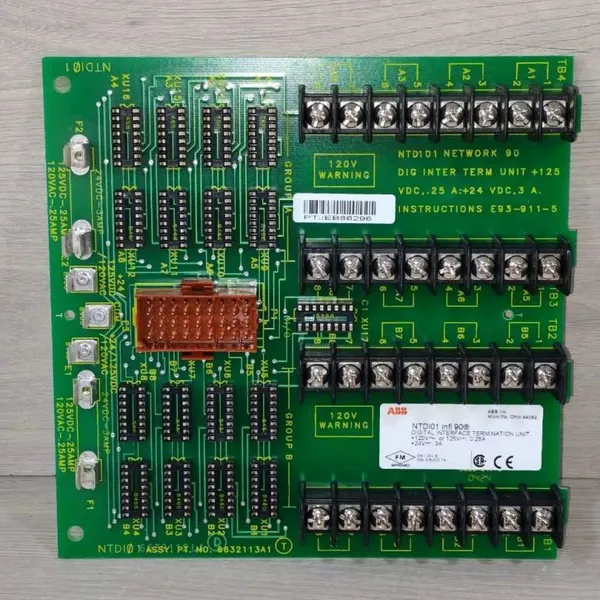 Read More
 -
MOOG G771K & G772K Series Servo Valves: Complete Obsolete-to-Replacement Model Cross-Reference Guide
September 8, 2026IntroductionMOOG is the global leader in precision electrohydraulic servo valve technology, delivering high dynamic response, low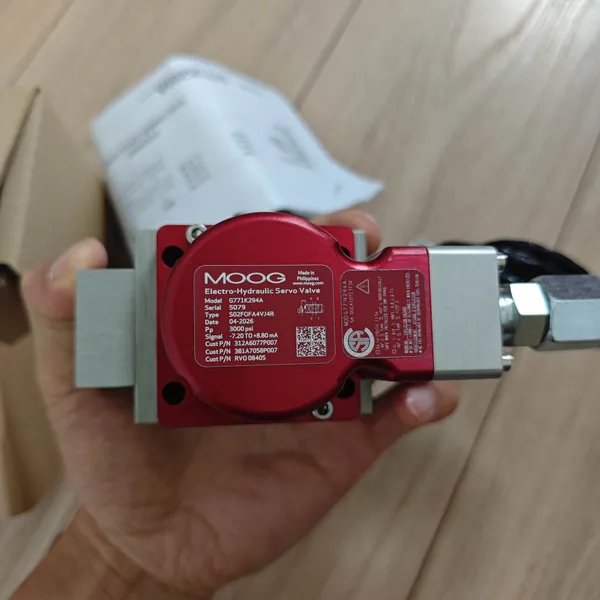 Read More
 -
ABB MPS III Power Supply & Control System Components: Complete Product Guide for Symphony Plus Harmo
August 13, 2026IntroductionABB's Symphony Plus Harmony distributed control system (DCS) is one of the most widely deployed industrial automat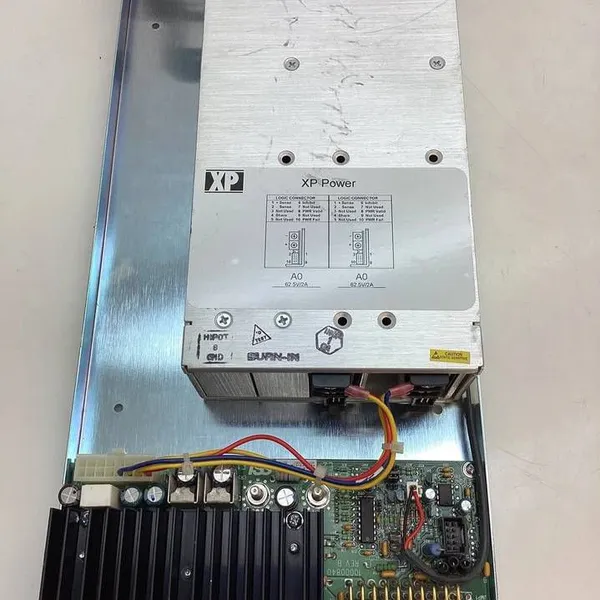 Read More
 -
Valmet Spare Part Sets H132200 H026194 H098546 H108587 H136942 H120684 & Seat Rings 743880 743900
July 6, 2026Valmet Spare Part Sets H132200, H026194, H098546, H108587, H136942, H120684 and Seat Rings 743880, 743900: A Complete Guide to Rel Read More

Contact Us
Recommended Products
-
 ABB PHARPS00010000 System Power Supply Module Symphony Harmony DCSNegotiableMOQ: 1 Ton
 -
ABB PMKHRMBRC3000A Redundancy Cable Assembly – Original Factory-Sealed BRC300/BRC400 DCS Redundancy Link CableNegotiableMOQ: 1 Ton
-
MOOG G771K / G772K Series Intrinsically Safe Two-Stage Electro-Hydraulic Servo Valves – Brand New OriginalNegotiableMOQ: 1 Ton
-
Metso Pneumatic Actuator VPVL100SR6BDNegotiableMOQ: 1 Piece
-
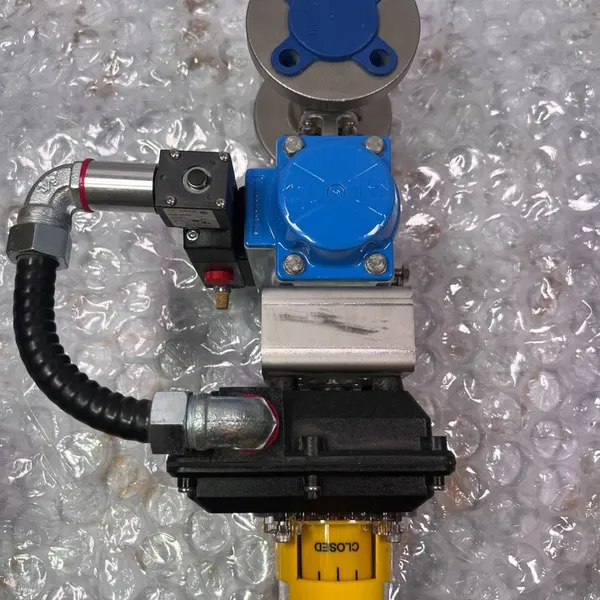
Metso Locator ND9206HE1T-K2-A3-DS04NegotiableMOQ: 1 Piece
-
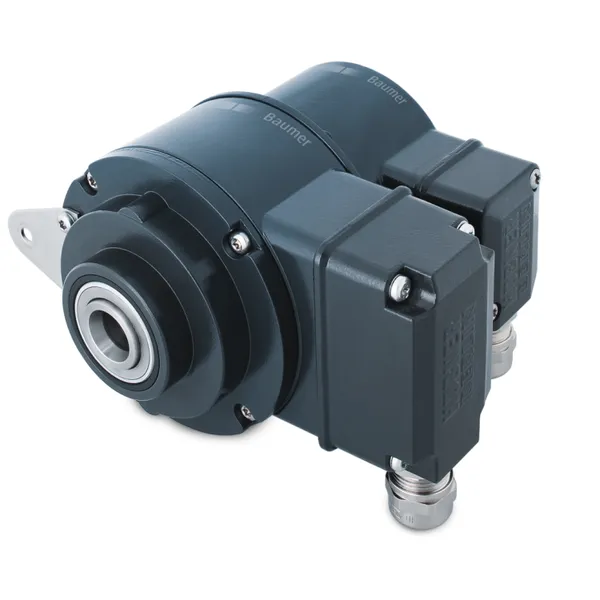
Baumer Encoder HOG10 DN1024 I LR 16H7 KLK-AXNegotiableMOQ: 1 Unit
-
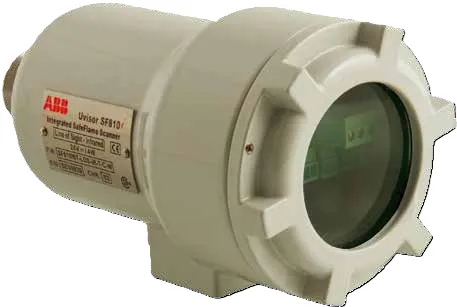
ABB Flame Detectors QDDMEE20GP and SF810-UV-3000NegotiableMOQ: 1 Unit
-
STONEL Position SwitchQX2VCR02HRA, QN4XD05HRA, EN33A05DMNegotiableMOQ: 1 Unit
-
STONEL Position SwitchQX35CR05SRA,QX35K05SDM ,QN45CK02HDMNegotiableMOQ: 1 Unit
-
ABB Pneumatic Actuator LP10BB10010+locator V18345-2020521001 Complete SetUS$ 3500MOQ: 1 Set

-
ABB LP32BB10 Pneumatic ActuatorNegotiableMOQ: 1 Unit
-
ABB WSFAN230 Cooling Fan (P/N: 68442966)US$ 1200 - 2000MOQ: 1 Unit
-
GE Multilin 869 Motor Protection Relay Model 869-E-P1-NN-G1-L-S-N-A-A-N-M-S-P-F-B-SE-N-N-B-4 - Complete Technical OverviewUS$ 11000 - 15000MOQ: 1 Unit
-
Fireye 95UVS4-1WINC: Next-Generation Digital UV Flame SafetyUS$ 4400 - 5500MOQ: 1 Unit
-
Fireye 95DSS3-1WINC Ultraviolet (UV) Flame ScannerUS$ 5300 - 6500MOQ: 1 Unit